Blog
Outils d’aide à la vente : Pour qui et pourquoi ?

Dans un paysage commercial caractérisé par un rythme rapide et une concurrence accrue, disposer d’un outil d’aide à la vente performant n’est plus un luxe mais une nécessité. Encore faut-il savoir pour qui il est pensé, à quel moment du cycle de vente il intervient, et comment l’intégrer sans bouleverser l’existant. C’est ce que nous allons détailler, étape par étape.
Un outil d’aide à la vente est une solution qui aide les équipes commerciales à mieux préparer leurs rendez-vous, présenter les bons contenus, automatiser certaines tâches, suivre leurs opportunités et piloter leur performance. CRM, plateforme de Sales Enablement, outil de prospection, solution d’automatisation, agent IA ou outil de reporting : chaque famille répond à un besoin précis du cycle de vente, que nous détaillons plus loin dans cet article.
| Besoin | Type d’outil | Usage | Bénéfice |
|---|---|---|---|
| Préparer un rendez-vous | Agent IA / profiler de compte | Résumer un compte ou un interlocuteur | Gain de temps |
| Présenter une offre | Plateforme de Sales Enablement | Accéder aux bons contenus, au bon moment | Discours plus maîtrisé |
| Suivre une opportunité | CRM | Centraliser les échanges et l’historique client | Meilleure visibilité |
| Former les commerciaux | Outil de coaching / formation | Parcours, quiz, mises en situation | Montée en compétence |
| Piloter la performance | Outil de reporting / BackOffice | Suivre l’usage des contenus et les KPI | Décisions plus fiables |
L’essentiel en 30 secondes
- Un outil d’aide à la vente bénéficie à quatre profils distincts : équipes de vente, dirigeants, indépendants/consultants et marketeurs.
- Il existe 5 grandes familles d’outils : formation, prospection, automatisation, rendez-vous et pilotage.
- Le choix dépend moins de la liste de fonctionnalités que de la compatibilité avec votre stack existante et de l’adoption réelle par les commerciaux.
- Bien intégré, un outil d’aide à la vente peut contribuer à améliorer la performance commerciale, notamment grâce au temps gagné, à une meilleure adoption des contenus et à un pilotage plus fiable.
Sommaire
- L’importance des outils d’aide à la vente aujourd’hui
- Qui peut bénéficier des outils d’aide à la vente ?
- Quels sont les avantages de leur mise en œuvre ?
- Les principaux outils d’aide à la vente disponibles sur le marché
- Comment choisir le bon outil d’aide à la vente ?
- Intégrer un outil dans votre processus de vente existant
- Questions fréquentes
L’importance des outils d’aide à la vente dans le paysage commercial actuel
La vente B2B a profondément changé ces dernières années. Le processus d’achat s’est complexifié, avec une participation moyenne de 6 à 10 parties prenantes dans la décision finale (Gartner). Les acheteurs sont également plus autonomes et mieux informés avant même d’entrer en contact avec un commercial : ils réalisent en moyenne 57 % de leur parcours d’achat avant d’initier le contact avec le fournisseur envisagé (Accenture).
Les commerciaux font donc face à des acheteurs plus exigeants, avec un désir d’avoir la bonne information au bon moment et une forte attente sur la personnalisation de la relation client. Or, la perte de temps sur des tâches non liées à la vente n’arrange rien : plusieurs études convergent sur le fait qu’un commercial ne consacre qu’environ un tiers de son temps à la vente directe, le reste étant absorbé par des tâches administratives, la recherche d’information et la coordination interne (Salesforce, State of Sales).
Le contexte en deux chiffres
Ces chiffres ne représentent qu’une partie des défis auxquels sont confrontés les commerciaux. Dans ce contexte, la fonction commerciale a besoin d’un véritable soutien pour performer au quotidien : c’est là qu’entrent en jeu les outils d’aide à la vente. Ils font partie intégrante de la stack technologique du commercial et se répartissent en 5 grandes catégories : les outils de formation, de prospection, d’automatisation, de rendez-vous, et de pilotage, que nous détaillerons plus loin dans cet article.
Qui peut bénéficier des outils d’aide à la vente ?

Contrairement à une idée reçue, les outils d’aide à la vente ne s’adressent pas qu’aux commerciaux de terrain. Quatre profils en tirent directement bénéfice, chacun à un niveau différent du processus commercial.
Les équipes de vente
Les outils d’aide à la vente sont avant tout conçus pour améliorer la performance commerciale. Pour cela, ils aident les commerciaux à mieux gérer leurs prospects tout au long du cycle de vente, à vendre plus et mieux en rendez-vous. Ils les épaulent en automatisant certaines tâches chronophages et jouent un rôle important dans la montée en compétence de ceux-ci. Une solution de formation et de coaching continu s’inscrit directement dans cette logique, en transformant chaque rendez-vous en opportunité d’apprentissage.
Les dirigeants d’entreprise
Les dirigeants d’entreprise (gérant de PME ou cadre dirigeant de grande entreprise) peuvent utiliser des outils d’aide à la vente pour piloter leur activité et centraliser leurs contenus marketing et commerciaux. L’un des objectifs de ces outils est d’améliorer le partage d’informations en facilitant l’accès et l’utilisation de ces contenus lors des rendez-vous. Ils s’en servent aussi pour former leurs commerciaux, renforcer la synergie entre les équipes et améliorer la prise de décision grâce aux KPIs offerts par ce type d’applicatif — une approche que nous détaillons dans notre article sur le Sales Enablement.
Les indépendants et les consultants
Les indépendants et les consultants peuvent tirer parti des outils d’aide à la vente pour leurs besoins propres (prospection, gestion client), mais le plus souvent, c’est dans le cadre de leur activité de conseil qu’ils interviennent : en tant que prescripteurs de solutions, ils sont amenés à les maîtriser et à les promouvoir auprès de leurs propres clients. Une bonne maîtrise des processus de vente qu’ils accompagnent devient alors un véritable atout de différenciation.
Les professionnels du marketing
Les professionnels du marketing ont besoin des outils d’aide à la vente pour générer des leads qualifiés pour les équipes commerciales et disposer d’une meilleure compréhension du cycle de vente et des parcours suivis. Ces outils les aident à mieux comprendre l’environnement dans lequel évoluent les commerciaux en rendez-vous (contenus présentés, analyse conversationnelle, comportement d’achat…), à évaluer la montée en maturité des prospects et à s’appuyer sur des analyses détaillées pour adapter leur stratégie. C’est précisément l’enjeu d’une démarche d’alignement entre contenu marketing et stratégie commerciale.
Quels sont les avantages de la mise en œuvre d’un outil d’aide à la vente ?
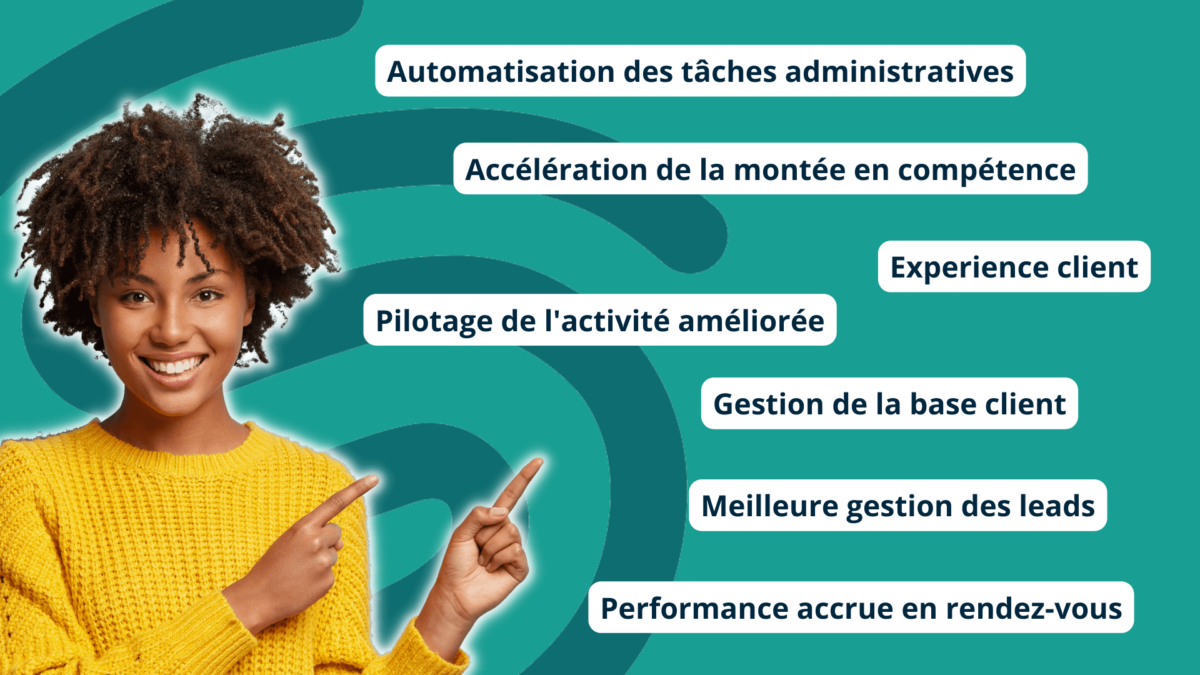
Au-delà des bénéfices propres à chaque profil, la mise en œuvre d’un outil d’aide à la vente produit des effets mesurables à l’échelle de toute l’organisation commerciale.
Le premier gain, le plus immédiat, est le temps libéré. En automatisant la saisie de comptes-rendus, la recherche de contenus ou la préparation de rendez-vous, les commerciaux récupèrent un temps précieux qu’ils peuvent réinvestir dans la relation client plutôt que dans des tâches administratives.
Le deuxième gain concerne l’alignement entre les équipes. Un outil d’aide à la vente bien déployé fait converger marketing et commerce autour d’un même socle de contenus et d’indicateurs, réduisant les frictions classiques entre les deux fonctions évoquées dans notre article comment réconcilier les commerciaux et le marketing.
Le troisième gain est la montée en compétence accélérée des équipes, particulièrement utile lors de l’intégration de nouveaux commerciaux, qui peuvent s’appuyer sur des parcours de formation structurés plutôt que sur un compagnonnage informel et chronophage.
Le quatrième gain, souvent sous-estimé, c’est le pilotage par la donnée : un dirigeant qui dispose de KPI fiables sur l’usage réel des contenus et l’avancée des opportunités prend de meilleures décisions, plus vite.
C’est précisément ce que mesurent les bons indicateurs de pilotage commercial. Pour aller plus loin sur ce sujet, notre article KPI de vente pour Dir Commercial détaille les indicateurs à suivre en priorité, et notre fiche définition KPI pose les bases si le sujet est encore nouveau pour votre organisation.
Pris ensemble, ces quatre gains expliquent pourquoi les entreprises qui mesurent rigoureusement l’impact de leur outil d’aide à la vente observent en moyenne une augmentation de leurs ventes de 5 à 15 % (retours clients Salesapps). Le chiffre varie selon la maturité de l’organisation et la qualité de l’intégration, ce qui nous amène directement à la question suivante : quels outils choisir, et comment les intégrer correctement ?
Voir en action
Quels gains mesurables pour votre organisation ?
Nos experts vous montrent en 20 minutes comment Salesapps structure le rendez-vous commercial pour libérer du temps et fiabiliser votre pilotage.
Demander une démo personnaliséeLes principaux outils d’aide à la vente disponibles sur le marché

Le marché des outils d’aide à la vente est vaste, et chaque entreprise n’a pas besoin de tous les déployer en même temps. Pour s’y retrouver, il est plus utile de raisonner par famille d’outils, organisée selon l’étape du cycle de vente qu’elle vient soutenir, plutôt que par marque. Chaque famille regroupe en réalité plusieurs sous-catégories : un CRM ou un outil de gestion de propositions et de devis relève de l’automatisation, tandis qu’un outil de retranscription et d’analyse conversationnelle ou une solution de signature électronique viennent plutôt soutenir l’étape du rendez-vous.
Comment monter en compétence vos commerciaux en continu, sans les immobiliser ?
Comment identifier et qualifier les bons prospects plus rapidement ?
Comment libérer du temps administratif sans perdre en rigueur ?
Comment être percutant et personnalisé face au client, en présentiel comme à distance ?
Comment centraliser, mesurer et orchestrer l’ensemble du dispositif ?
Figure. Les 5 familles d’outils d’aide à la vente, organisées selon l’étape du cycle de vente qu’elles soutiennent.
C’est précisément sur la cinquième famille, le pilotage, que se positionne une application de Sales Enablement comme Salesapps. Plutôt que de couvrir une seule étape du cycle de vente, elle a vocation à centraliser les contenus commerciaux, structurer le rendez-vous client et donner aux dirigeants une vision consolidée de l’usage et de la performance, via un BackOffice dédié. C’est aussi à ce niveau qu’interviennent les briques les plus récentes du marché, à l’image des agents IA, qui automatisent une partie de la préparation et du suivi des rendez-vous commerciaux.
Dans la pratique, ces familles ne s’opposent pas : un outil de pilotage performant s’appuie sur les briques de prospection, de formation et d’automatisation déjà en place dans l’entreprise, plutôt que de les remplacer. C’est tout l’enjeu de la dernière étape : l’intégration.
Comment choisir le bon outil d’aide à la vente ?
Le choix d’un outil d’aide à la vente doit partir de vos objectifs commerciaux, et non d’une simple liste de fonctionnalités. Avant de comparer les solutions, il est essentiel d’identifier le besoin prioritaire : mieux préparer les rendez-vous, centraliser les contenus, automatiser les tâches, améliorer la formation commerciale ou fiabiliser le pilotage.
- Vos objectifs commerciaux : gain de temps, taux de transformation, adoption des contenus, montée en compétence.
- Votre cycle de vente : vente courte, vente complexe, vente terrain, vente grands comptes.
- Votre stack existante : CRM, outils marketing, gestion documentaire, reporting.
- L’expérience utilisateur : simplicité, accès mobile, usage en rendez-vous.
- Les capacités de pilotage : KPI, adoption, contenus utilisés, performance commerciale.
- L’accompagnement : onboarding, support, conduite du changement.
Notre article 5 critères pour choisir une application de Sales Enablement détaille une grille d’évaluation plus poussée si vous évaluez spécifiquement une solution de pilotage. Une fois ces critères posés, reste l’étape la plus déterminante : l’intégration de l’outil dans votre processus de vente existant.
Intégrer un outil d’aide à la vente dans votre processus de vente existant
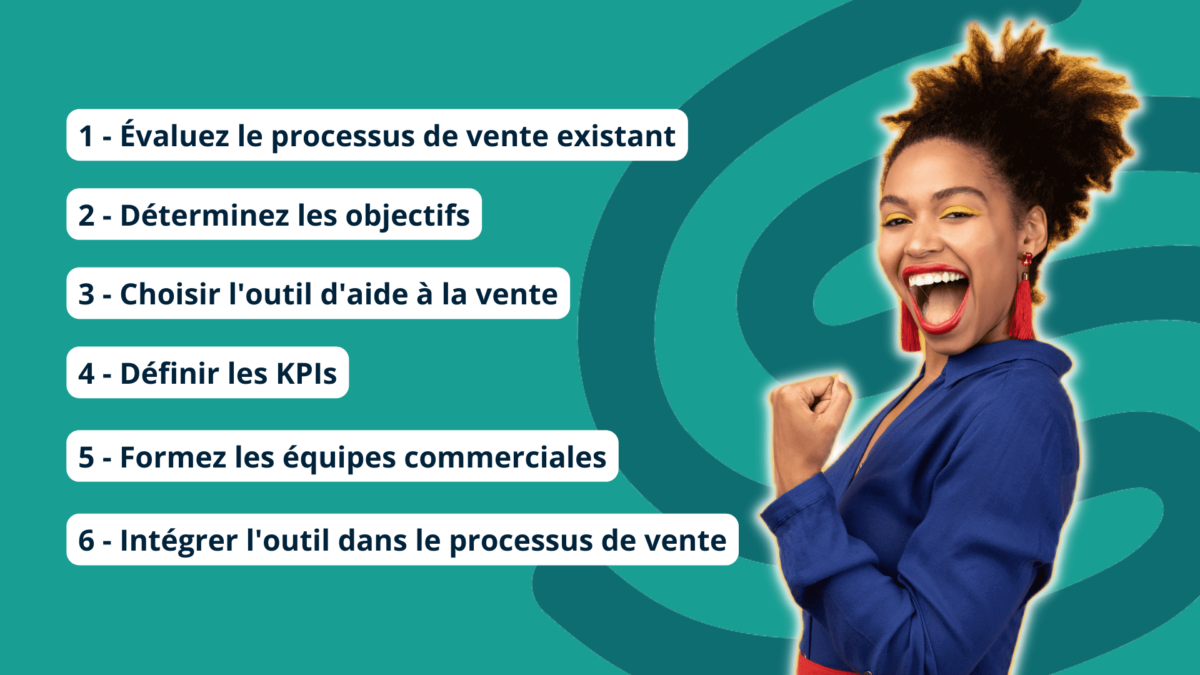
Le meilleur outil du marché ne produit aucune valeur s’il reste sous-utilisé. Dans la plupart des projets, la valeur ne vient pas seulement du choix de l’outil, mais surtout de son intégration dans les usages commerciaux existants. Trois conditions reviennent systématiquement chez les entreprises qui réussissent ce virage.
La compatibilité avec votre stack existante
Un outil d’aide à la vente ne doit jamais fonctionner en silo. Il doit pouvoir se connecter à votre CRM, à vos outils de gestion documentaire et à vos plateformes marketing, sans imposer une double saisie aux commerciaux. C’est pour cette raison que nous recommandons systématiquement de coupler son CRM à une solution de Sales Enablement plutôt que de les faire coexister sans lien, et de vérifier en amont la richesse des connecteurs disponibles.
Un outil d’aide à la vente performant mais déconnecté de votre CRM génère un travail de ressaisie qui finit toujours par décourager les équipes commerciales sur la durée.
L’adoption réelle par les équipes terrain
Posséder des licences ne suffit pas : encore faut-il que les commerciaux utilisent l’outil au quotidien. L’adoption se prépare en amont, en impliquant les équipes vente et marketing dans le choix des contenus et l’onboarding, plutôt qu’en leur imposant un outil clé en main. Changer d’outil commercial comporte toujours une part de risque et d’opportunité, comme nous le détaillons dans notre article changer d’outil commercial : risque ou opportunité.
Des critères de choix alignés sur vos objectifs
Le choix d’un outil d’aide à la vente dépend avant tout des objectifs commerciaux de l’entreprise : augmenter le taux de transformation, réduire le temps administratif, ou encore fiabiliser le pilotage. Notre article 5 critères pour choisir une application de Sales Enablement détaille la grille d’évaluation à utiliser avant tout arbitrage, et notre fiche automatisation des ventes permet de cadrer précisément ce que recouvre ce terme souvent mal défini.
À retenir
5 enseignements clés
- Un outil d’aide à la vente s’adresse à quatre profils complémentaires : équipes de vente, dirigeants, indépendants/consultants et marketeurs, chacun y trouvant un usage différent.
- Ses bénéfices se mesurent sur quatre plans : temps libéré, alignement sales/marketing, montée en compétence et pilotage par la donnée.
- Le marché se structure en 5 familles d’outils : formation, prospection, automatisation, rendez-vous et pilotage, cette dernière jouant un rôle de chef d’orchestre.
- La réussite d’un projet dépend avant tout de l’intégration dans les usages existants : compatibilité technique, adoption terrain et alignement avec les objectifs commerciaux priment sur la liste de fonctionnalités.
- Bien intégré, un outil d’aide à la vente se traduit en moyenne par 5 à 15 % de ventes supplémentaires (retours clients Salesapps).
Questions fréquentes sur les outils d’aide à la vente
Qu’est-ce qu’un outil d’aide à la vente ?
Un outil d’aide à la vente (OAV) est une solution, numérique ou physique, qui accompagne les équipes commerciales tout au long du cycle de vente : formation, prospection, automatisation des tâches, préparation et suivi du rendez-vous, ou pilotage de la performance. Il vient en soutien du commercial, sans jamais s’y substituer.
Qui doit utiliser un outil d’aide à la vente dans l’entreprise ?
Quatre profils en bénéficient directement : les équipes de vente, qui l’utilisent au quotidien en rendez-vous ; les dirigeants, qui pilotent leur activité et centralisent leurs contenus ; les indépendants et consultants, qui le prescrivent à leurs clients ; et les marketeurs, qui en tirent des insights sur le comportement d’achat.
Quels sont les différents types d’outils d’aide à la vente ?
On distingue généralement cinq familles : les outils de formation, de prospection, d’automatisation des tâches, de rendez-vous (présentation et contenus contextualisés), et de pilotage (KPI, BackOffice, Sales Enablement). Chaque famille répond à une étape précise du cycle de vente.
Pourquoi un outil d’aide à la vente est-il devenu indispensable ?
Le parcours d’achat B2B s’est complexifié : 6 à 10 parties prenantes en moyenne participent à la décision (Gartner), et l’acheteur réalise 57 % de son parcours avant tout contact commercial (Accenture). Dans ce contexte, un commercial qui ne consacre encore qu’environ un tiers de son temps à la vente directe (Salesforce) a besoin d’un outil pour rester compétitif.
Comment choisir le bon outil d’aide à la vente pour son entreprise ?
Le choix doit partir des objectifs commerciaux (augmenter le taux de transformation, réduire le temps administratif, fiabiliser le pilotage), puis vérifier la compatibilité avec le CRM existant, la facilité d’adoption par les équipes terrain et la richesse du support proposé. La fonctionnalité la plus avancée ne sert à rien si l’outil reste sous-utilisé.
Comment intégrer un outil d’aide à la vente sans perturber l’organisation existante ?
Trois leviers sont déterminants : connecter l’outil au CRM et aux systèmes existants pour éviter la double saisie, impliquer les équipes vente et marketing dès la phase de choix pour favoriser l’adoption, et accompagner le déploiement d’un onboarding structuré plutôt que d’un simple accès aux licences.
Quel est le retour sur investissement d’un outil d’aide à la vente ?
Les entreprises qui mesurent rigoureusement l’impact de leur dispositif observent en moyenne une augmentation de leurs ventes de 5 à 15 % (retours clients Salesapps). Ce résultat dépend fortement de la qualité de l’intégration et du suivi des KPI mis en place, davantage que de l’outil choisi lui-même.
Passer à l’action
Découvrez l’outil d’aide à la vente pensé pour le rendez-vous commercial
En 20 minutes, nos équipes vous montrent comment Salesapps centralise vos contenus, structure vos rendez-vous et donne à vos dirigeants une vision claire de la performance.
Demander une démo personnalisée