
Sales process
The Guide for Sales Management
A sales process isn’t just a checklist of steps. It’s the system that makes your results repeatable, your forecasts reliable, and your team less reliant on individual talent alone. Here are the key steps, how to formalize this process, and—most importantly—how to align it with the way your buyers actually make purchases.
What is a sales process?
The sales process refers to the structured set of steps that a sales team follows to convert a potential customer into an actual customer, from lead generation to customer retention. When formalized, this sales process makes results reproducible, improves conversion and closing rates, and ensures more reliable revenue forecasts.
It should not be confused with the sales cycle, which refers to the amount of time it takes to close a deal. The process describes the “how” and its steps; the cycle measures the time involved.
Why a Structured Process Is a Game-Changer
In short, for a management team
Formalizing your sales process means transforming a collection of individual talents into a corporate system. The benefit isn’t compliance—it’s predictability: a clear pipeline, reliable forecasts, faster onboarding, and a conversion rate that improves at every measured stage. But there’s one condition: the process must align with the customer’s actual buying journey—which is nonlinear and largely self-directed—rather than a theoretical ten-step funnel.
Why formalize your sales process?
A sales team that operates without a defined process relies on individual talent. This approach works as long as the best people are there, but falls apart as soon as they leave or the market gets tougher. Formalizing the process delivers four benefits that management can see right away.
- Reproducible results. What works for your top salespeople becomes a standard that the entire team can apply, rather than remaining individual know-how.
- Reliable forecasts. Clear milestones and objective criteria for moving forward make the pipeline transparent and the forecast credible to the executive committee.
- Accelerated onboarding. A new sales rep gets up to speed much faster when the path is clearly laid out rather than having to start from scratch.
- Continuous improvement. A well-defined process can be measured step by step, allowing for optimization exactly where business operations are actually stalled.
The Steps in the Sales Process
The number of stages matters less than their clarity and the criteria that determine when a deal moves from one stage to the next. Here is the framework common to most sales reps processes.
- Prospecting and lead generation. Identify and attract potential customers through prospecting, digital marketing, and referrals to feed the top of the pipeline.
- Lead qualification. Sort contacts based on their potential and maturity, using the CRM and lead nurturing to help those who aren't yet ready move forward.
- Identifying needs. Gaining a thorough understanding of the prospect’s situation, challenges, and potential objections. At this stage, listening takes precedence over speaking.
- Presentation and demonstration. Tailor the offering and deliver a sales pitch focused on the benefits and value for the buyer.
- Negotiation and handling objections. Adjust terms and address barriers (price, ROI, terms) to reach a mutual agreement.
- Closing and signing. Formalize the agreement, log the opportunity in the CRM, and notify the relevant teams to ensure a smooth start.
- Customer retention and account development. Ensure customer satisfaction, then build on the relationship throughupselling and cross-selling to existing customers.
Sales Process and Buyer's Journey: Moving Beyond a Linear Perspective
The limitation of the traditional ten-step sales funnel is that it describes how the company sells, not how the customer buys. Yet today’s B2B buyer rarely follows a straight path: they research on their own, backtrack, consult with several people, and only engage with a sales representative late in the decision-making process.
An effective sales process is aligned with this real-world journey. It provides relevant touchpoints at the moments the buyer expects them, relies onalignment between sales and marketing to inform the decision-making process early on, and acknowledges that the decision is largely made before the first meeting.
How to Optimize Your Sales Process
A formalized process is not set in stone; it is continuously improved. Four key areas drive the most significant gains.
- Track each stage. Conversion rates by stage, cycle time, and closing rates: these KPIs pinpoint exactly where deals are stalling.
- Automate ancillary tasks. Follow-ups, CRM data entry, reporting:sales automation frees up time for selling at every stage.
- Equip the CRM and the team. An up-to-date CRM and sales reps content that’ sales reps at the right time streamline the transition from one stage to the next.
- Ongoing training. The process only works if the teams have mastered it. Regular training and coaching help embed best practices.
Common Mistakes
Model the process after the company, not the customer
A funnel that ignores the actual buying journey forces the prospect into a mold that doesn't match the way they make decisions.
Stages with no qualifying criteria
Without an objective definition of what moves a deal forward, the pipeline fills up with opportunities that never move forward.
A process that has never been measured
Formality without implementation is pointless. It is step-by-step measurement that transforms the process into a tool for improvement.
Forgetting About After-Sales Service
Focusing solely on closing the deal means overlooking customer retention and the development of existing accounts—which are the most profitable sales.
Where Sales Enablement Comes Into Play
A sales process can only succeed if sales reps the right content, the right pitch, and the right training at every stage. That’s the role of a sales enablement platform like Salesapps: it supports every stage of the process, from the first meeting to customer retention, measures what actually works, and uses those insights to continuously improve the process.
Frequently Asked Questions
What are the steps in a sales process?
Most sales reps processes are structured around seven steps: prospecting and lead generation, qualification, needs assessment, presentation and demonstration, negotiation and handling objections, closing and signing, and finally, account retention and development. The number of steps is less important than the clarity of the criteria for moving from one step to the next.
What is the difference between the sales process and the sales cycle?
The sales process describes the steps taken to convert a prospect into a customer: it’s the “how.” The sales cycle measures the time it takes to close a deal: it’s the “how long.” We optimize the process to, among other things, shorten the cycle.
How do you structure an effective sales process?
By defining clear stages with objective progression criteria, aligning them with the customer’s actual buying journey rather than with the internal organization, measuring them using stage-specific KPIs, and equipping teams (with CRM, content, and training) to ensure a smooth transition at each stage.
What is the difference between the sales process and the buying journey?
The sales process describes the seller’s approach; the buying journey describes the customer’s approach. Since B2B buyers largely research on their own and do not follow a linear path, a good sales process aligns with this journey rather than forcing them into a theoretical funnel.
How can you measure the effectiveness of your sales process?
By tracking conversion rates at each stage, the sales cycle duration, the closing rate, and performance by acquisition channel. These metrics reveal where deals are stalling and guide continuous process improvement.
Recommended reading on this topic
Read more
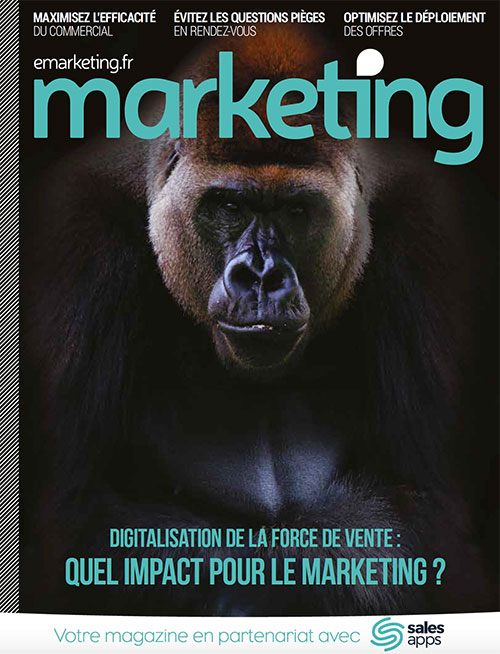
Our white paper, “Digitizing the Sales Force”: How to Structure, Equip, and Digitize Your End-to-End Sales Process.
Download the white paper