
Blog
Onboarding or how to successfully integrate new employees sales reps ?
Successful onboarding delivers on two promises at once: new hires who stay, and accelerated skill development. Conversely, a botched onboarding process takes its toll in the form of turnover, a slow rise in productivity, and missed initial appointments. The question remains: how should you structure the onboarding of your sales reps to turn it into a driver of performance, and what roles do Sales Enablement and AI play in this process?
The basics in 30 seconds
- Successful onboarding is measured by two outcomes: talent retention and the speed at which new hires become proficient.
- It is organized into four stages, from preparing for the child's arrival to close monitoring during the first few months.
- Five indicators show whether it's working: skill development, efficiency, autonomy, the ability to think outside the box, and employee turnover.
- Sales Enablement tackles the real enemy of onboarding: forgetfulness. At Adéquat, it has reduced employee turnover by 30%.
What is sales onboarding?
Onboarding refers to the process of integrating a new hire into the company. For a sales representative, it is their first experience from the inside, and it has a significant impact on what follows.
An onboarding process that familiarizes new hires with their environment, the company culture, their mission, and their responsibilities, enabling them to quickly become independent and effective. It ranges from pre-onboarding and orientation day to coaching, including training and regular follow-ups throughout the entire onboarding period.
Why Onboarding Weighs on Sales Performance

Onboarding isn’t just an administrative formality—it’s an investment in performance. A sales representative who feels welcomed feels supported, commits more quickly, and starts contributing sooner. The numbers clearly confirm this.
What the Research Reveals
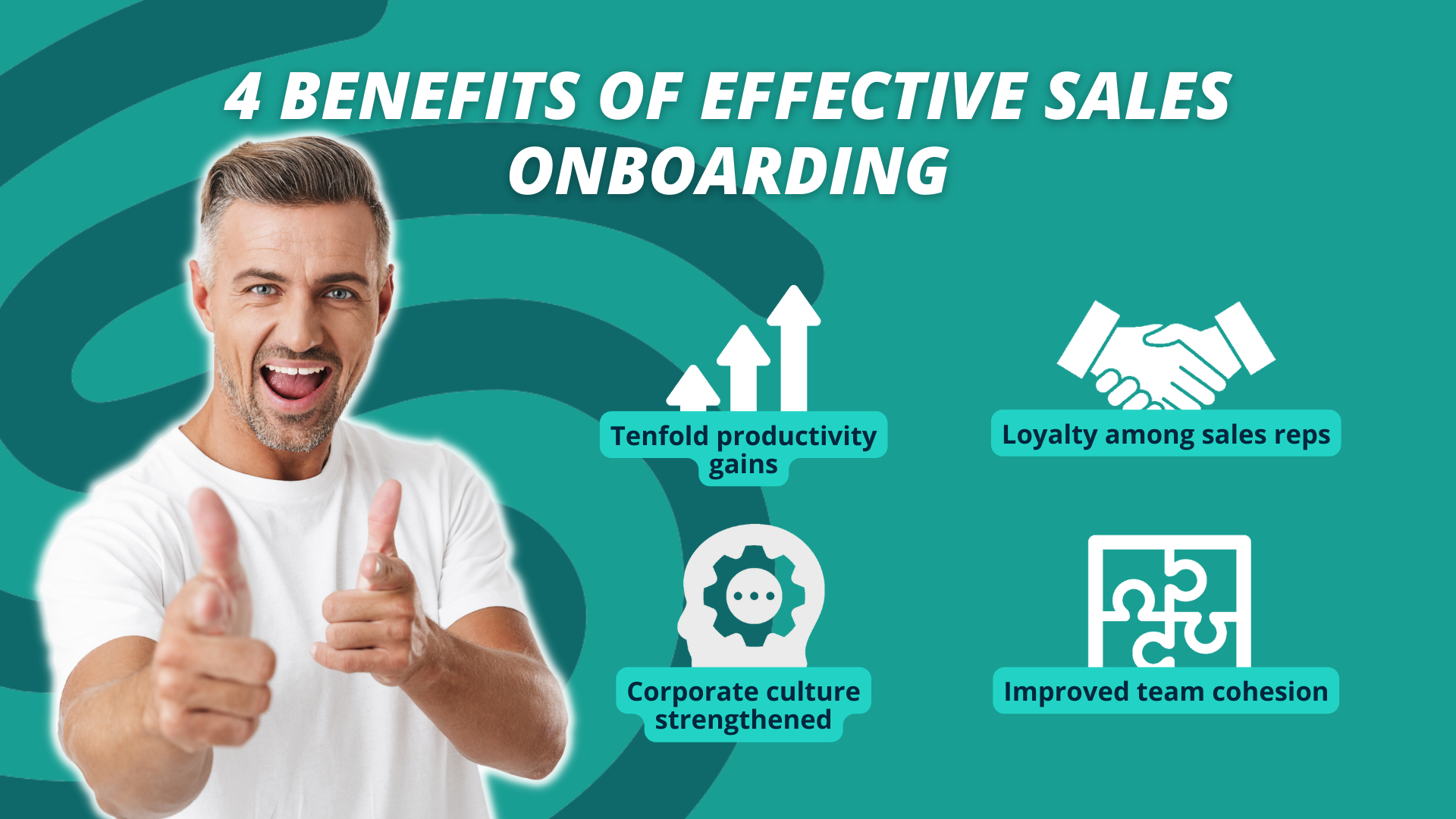
Beyond retention and productivity, onboarding fosters a sense of belonging. When salespeople identify with the company’s culture and values, they become more engaged and committed over the long term. The Harvard Business Review supports this view: a formal onboarding program is associated with a 50% increase in retention and a 62% increase in productivity. Finally, onboarding serves as a unifying force among teams by fostering relationships with other departments and strengthening cross-functional cohesion.
The 4 Steps to Successful Onboarding
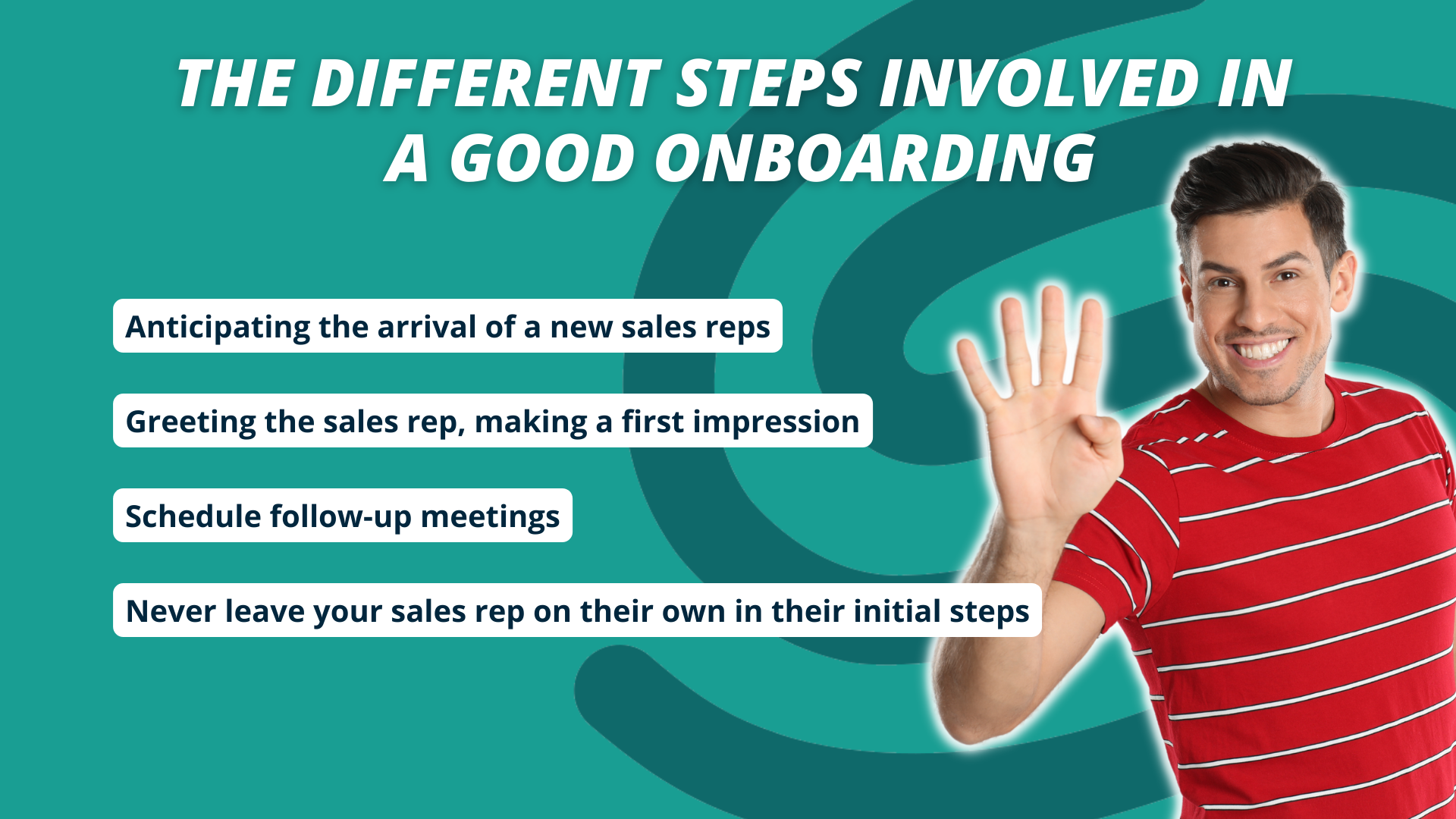
Preparing for the New Sales Representative's Arrival
Planning ahead makes all the difference. Even before the first day, set up the workspace and gather the necessary equipment (computer, phone, work tools), and send the new hire some information about the company, its culture, and the team they’ll be joining. This makes them feel welcome and gives them a head start when they arrive.
Pay Attention to the Welcome and First Impressions
The first day sets the tone. A warm welcome, a welcome meeting, an introduction to the team, and a welcome booklet set the stage. This is the time to review the sales representative’s goals, expectations, and role, and to answer any questions they may have. In this way, the company demonstrates its commitment to the sales representative’s success.
Schedule follow-up appointments
Held weekly or monthly as needed, these meetings help track progress, address obstacles, and provide useful feedback. They also strengthen the relationship between the manager and the sales representative—a crucial bond during the first few months.
Never leave a new salesperson to figure things out on their own
Isolation is the worst enemy of integration. Foster communication with the team, and encourage collaboration and knowledge sharing. A newcomer who is supported by others develops their skills much faster than a salesperson left to fend for themselves.
How to Tell If Your Onboarding Is Working
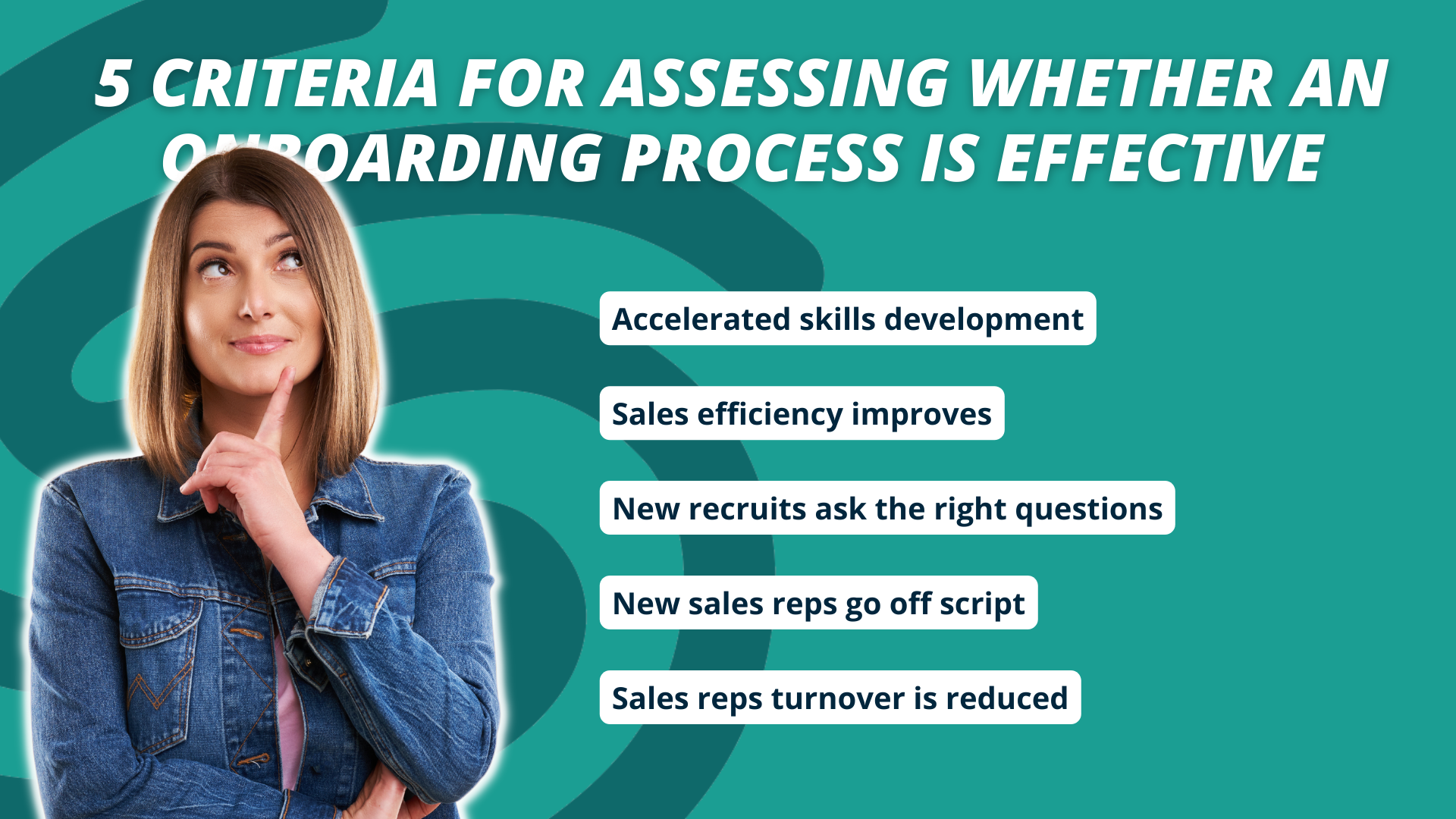
A good onboarding program prepares new hires to start selling as quickly as possible. There are five indicators that show whether it delivers on its promises.
Skill development is accelerating. That is the primary goal. Measure the time spent mastering the sales pitch, progress in understanding the product offerings, the quality of the presentation during meetings, and the ability to provide relevant responses to buyers.
Sales performance is improving. New hires must put what they’ve learned into practice and meet their initial goals. Metrics such as the volume of prospecting, the appointment-setting rate, and the conversion rate provide a clear picture.
New hires ask the right questions. Thoughtful questions about products, customers, and goals demonstrate a solid understanding of the business and the ability to adapt quickly.
sales reps s know how to deviate from the script. Effective onboarding doesn’t turn people into script readers. It helps them gain a deep understanding of the buyer’s needs and tailor the conversation accordingly. Knowing how to improvise effectively is an excellent indicator.
Turnover is declining. Compare your attrition rate for new hires at 3, 6, and 12 months, and then compare it to your industry average. A thorough onboarding process lays the groundwork for retention right from the start.
Barriers to Effective Onboarding
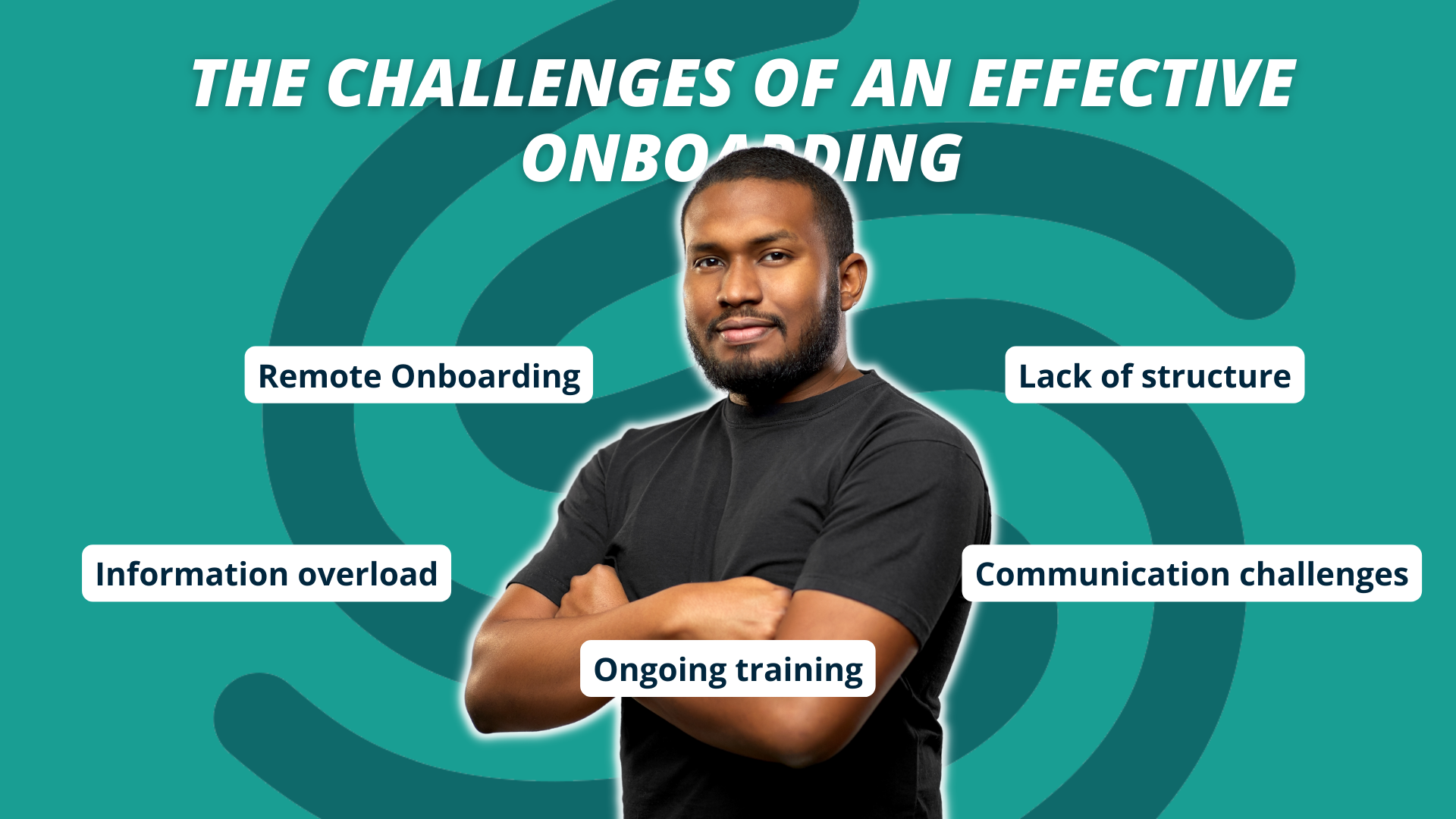
Successful integration requires avoiding five common pitfalls, regardless of the industry or organization.
Information overload. Trying to convey everything at once overwhelms the new recruit. The right balance lies between providing the necessary information and causing cognitive overload.
A lack of structure. Without a clear onboarding process, new sales reps get lost, and both their productivity and satisfaction suffer as a result.
Remote onboarding. With remote work, part of the onboarding process takes place online, which makes it harder to build relationships and access content. A sales enablement app secures this access, keeping it up to date and available offline.
The Blind Spots in Communication. Smooth communication between a new hire, their manager, and the team doesn’t happen on its own. The right channels must be established from the start to facilitate day-to-day communication.
The lack of ongoing training. Onboarding doesn’t end after the first few weeks. Ongoing training helps employees maintain their skills and keeps the sales force competitive in the market.
Sales Enablement: A Catalyst for Onboarding
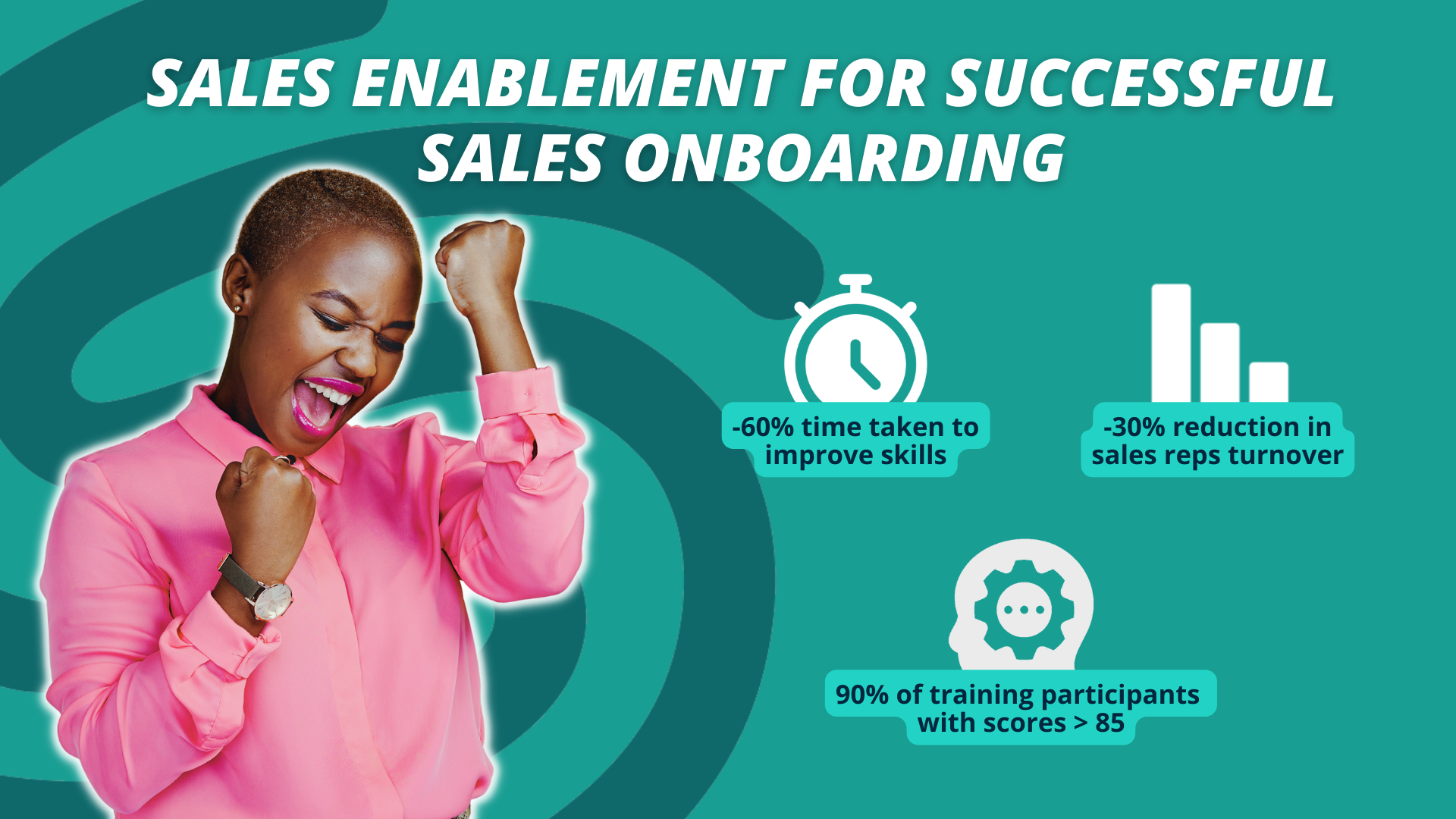
Onboarding is essential to building a high-performing sales team, and sales enablement is a central component of that process. The primary obstacle remains the sheer volume of information dumped on new hires—information that is often unrelated to their role and difficult to retain.
The Real Enemy of Integration—and How to Deal With It
The key lies in repeated exposure to content: the more exposure there is, the more deeply the training takes root. By leveraging an app used on a daily basis—even offline—you continuously expose your sales force to the right content. The result: more confident sales sales reps s during meetings, successful onboarding, and product launches that everyone has a firm grasp of.
A sales enablement tool also helps assess progress. The quiz format measures knowledge on a specific topic: managers identify gaps, recommend targeted content, and provide personalized support. The data collected reveals best practices for onboarding, which are then applied to future new hires. This is precisely the logic behind a system designed to train and coach your sales reps on data, as part of a continuous, practice-based approach.
This approach serves two purposes. It optimizes onboarding through training programs tailored to the sales reps s and their on-the-job challenges. It reduces the time it takes to become proficient, thereby accelerating performance. It even enhances the program’s appeal to job seekers by helping candidates envision themselves in their future roles.
See it in action
Accelerate the skill development of your new sales reps
In 20 minutes, our experts will show you how Salesapps structures the onboarding process, exposes your teams to the right content, and makes skill development visible and manageable.
Request a demoWhat Our Customers Say

With Salesapps, the time required to onboard new sales reps —that is, to introduce the company, its offerings, and its latest updates—has been reduced by a factor of four, from an average of one month to one week.
Franz Thibault, CEO, Thibault Bergeron
We manage about 50 brands, many of which are over a century old. With Salesapps, we quickly achieved a 100% adoption rate. Our sales reps save a tremendous amount of time preparing for their appointments—for example, by accessing the materials from the training sessions held for new hires.
Sophie Saussier, Manager of Sales Support Tools, Moët Hennessy Diageo
sales reps have a better grasp of the offers, so customers understand them better, and sales increase.
Vianney Leveugle, Director of Marketing and Sales, GEODIS
Key takeaways
5 Key Takeaways
- Onboarding is an investment in performance, not a mere formality: it impacts employee retention and the speed at which new hires develop their skills.
- It consists of four steps: preparing for the new hire’s arrival, ensuring a warm welcome, planning follow-up, and never leaving the new hire alone.
- Five metrics measure its effectiveness, ranging from the time it takes to adopt the pitch to the reduction in turnover.
- The real enemy of integration isforgetting: repeated exposure to content—made possible by sales enablement—addresses this issue.
- The results speak for themselves: onboarding time reduced by a factor of four at Thibault Bergeron, and employee turnover down by 30% at Adéquat.
Frequently Asked Questions About Sales Onboarding
What is successful sales onboarding?
This onboarding process quickly prepares new hires to start selling. It is based on a structured training program that familiarizes them with the company’s culture, products and services, and sales strategies. The result: rapid skill development, increased confidence, an earlier contribution to growth, and lower turnover.
Why is onboarding so important for a sales department?
Because it directly influences the success and retention of new sales reps. A solid onboarding process helps new hires adapt quickly, strengthens their commitment, and reduces the risk of early turnover—all of which are reflected in the team’s performance.
When does onboarding begin?
A few days before the new hire starts, during the pre-onboarding phase. The goal is to maintain the connection established during the hiring process, provide initial information, and clarify expectations. This ensures that the new hire arrives better prepared and more motivated from day one.
Who oversees the onboarding of a sales representative?
It depends on the size of the company. Generally, the manager and the human resources department share this responsibility. In mature organizations, the Sales Enablement Manager steps in to ensure that content is available and that employees develop their skills quickly.
What tools make onboarding easier?
The Sales Enablement app is one of the most effective tools available. It immerses sales representatives in their future roles from the moment they are hired, accelerates their skill development, and gets them up to speed faster. By consolidating training content and making it accessible offline, it facilitates a smooth onboarding process and helps reduce turnover among new hires.
Take action
Successfully Integrate Your sales reps with Salesapps
In just 20 minutes, learn how to structure the onboarding process, expose your teams to the right content, and turn onboarding into a measurable skill-building experience to build loyalty among your new hires.
Request a personalized demo